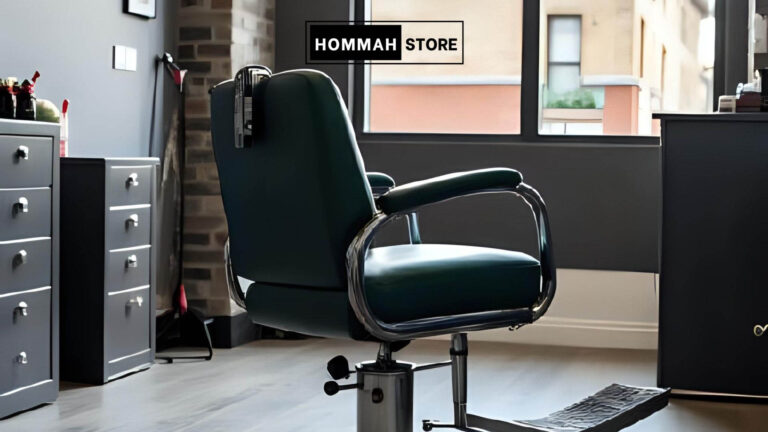
Choosing a Barber Chair is arguably the most critical investment you will make for your shop. It’s far more than just a place for clients to sit; it is the central tool of your trade, directly impacting your efficiency, your body’s health, and, crucially, your client’s experience. Investing in professional barber equipment that falls short on core features leads to costly replacements, discomfort, and workflow issues. To ensure your purchase is a reliable, long-term asset, you must look beyond aesthetics and prioritize five specific, non-negotiable functional elements.
1. The Power Core: Heavy-Duty Hydraulic Pump
The most essential mechanical component of any high-quality Barber Chair is its hydraulic system. If the pump fails, the chair fails.
The Need for Commercial-Grade Strength
A professional setting requires far more than the standard pump found in basic styling chairs. Your Heavy-Duty Hydraulic Pump must be capable of smoothly and reliably lifting significant weight.
- Weight Capacity: Always check the chair’s maximum supported weight. Professional Barber Chairs should comfortably handle 450 lbs (204 kg) or more to safely accommodate all body types.
- Stability and Lift: The pump must offer a full range of vertical movement without wobbling. This feature is vital for the barber, as it allows you to adjust the client to the perfect height for detail work, reducing strain on your back and shoulders throughout the day.
- Longevity: High-quality pumps are designed to endure hundreds of cycles daily for many years. This durability justifies the initial cost and prevents unexpected downtime.
2. Uncompromised Client Comfort and Ergonomics
A great haircut starts with a relaxed client. Client Comfort is a silent retention strategy; a comfortable client is a returning client.
Deep Cushioning and Support
Focus on the quality of the foam and the ergonomic design, not just the visual padding.
- High-Density Foam: Ensure the cushions are made from high-density foam that will resist compressing and sinking over time. Soft, cheap padding may feel good initially but quickly becomes uncomfortable and permanently deformed.
- Ergonomic Backrest: The backrest should be contoured to provide excellent lumbar support, especially when the client is sitting upright for a lengthy service.
- Adjustable Headrest: A sturdy, easily removable, and adjustable headrest is non-negotiable for supporting the neck and head during meticulous work like razor shaves or beard trims.
3. The Precision Tool: Deep Reclining Mechanism
A true Barber Chair must recline. This single feature separates professional barber equipment from standard salon chairs.
Necessary Recline for Service Versatility
The Reclining Mechanism is essential for specialized services that generate higher revenue.
- Shaving: A minimum 135-degree recline is needed, but ideally, look for a deep recline close to 180 degrees (flat). This is crucial for maximizing client comfort and giving the barber the best working angle for a hot towel shave.
- Smooth Operation: The mechanism should be smooth, quiet, and easy for the barber to operate, often via a simple lever. Any jerky or stiff movement suggests poor quality components.
- Integrated Footrest: A reclining chair must have a linked, synchronized footrest to fully support the client’s legs when reclined, promoting total relaxation.
4. Stability and Safety: Swivel Lock and Base
Safety and stability are paramount, especially when working with sharp tools near a client’s face.
Securing the Chair During Detail Work
The chair must remain absolutely static when needed, regardless of the client’s size or movement.
- Swivel Lock: A reliable swivel lock must completely freeze the chair’s rotation. This is non-negotiable during intricate detailing or razor work where even minor chair movement can be dangerous or ruin precision.
- Heavy Base: The chair needs a substantial, heavy base (usually cast iron or thick steel) to prevent tipping, especially when the chair is fully reclined and the client’s weight is shifted back. Look for wide, round, or stable square bases.
5. Built to Last: Commercial-Grade Upholstery
Your chair will face daily battles with hair dye, styling products, disinfectant, and friction. Your material must be ready.
Chemical and Wear Resistance
Only specific materials are suitable for the commercial environment of a barbershop.
- Commercial-Grade Upholstery: Choose Commercial-Grade Upholstery, specifically high-quality PVC or PU leather. Unlike genuine leather, these materials are engineered to resist chemical staining, cracking, and fading from regular sanitization.
- Easy to Clean: The surface should be non-porous and easy to wipe clean and dry quickly between clients, adhering to strict hygiene standards.
- Aesthetic Durability: Look for strong stitching (like the tufted or diamond-quilted styles seen on vintage and modern chairs) that is resistant to splitting under tension from continuous client rotation.
Conclusion
The decision to buy a Barber Chair should be approached as a critical business decision, not a simple aesthetic choice. By ensuring your next chair features a robust Heavy-Duty Hydraulic Pump, uncompromising Client Comfort and ergonomics, a reliable Reclining Mechanism, excellent stability, and Commercial-Grade Upholstery, you guarantee a long-lasting, high-performing piece of Professional Barber Equipment. This strategic investment will not only boost your workflow efficiency but also communicate a commitment to quality that your clients—and your bottom line—will appreciate for years to come.
Ready to Invest in the Perfect Throne for Your Barbershop?
Contact Hommah Store Today to speak with our equipment specialists and find a Barber Chair that meets all five of these non-negotiable professional standards. We offer a full range of chairs, from vintage barber chair models to modern, feature-rich designs, all built for commercial longevity.